Hard Disk Disposal in Singapore for Healthcare and Finance Companies: Stricter Standards, Explained
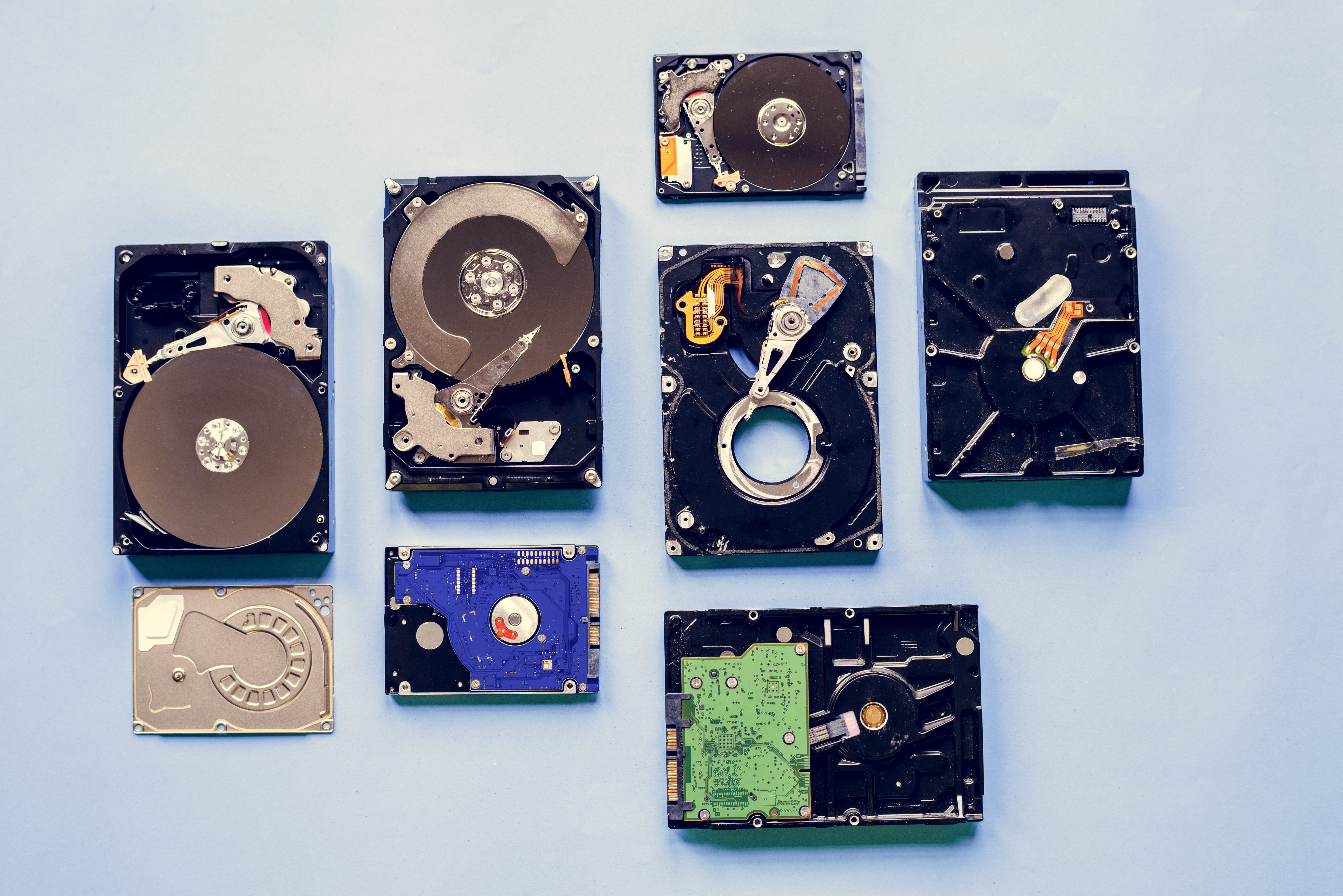
If you are planning hard disk disposal in Singapore for a healthcare or finance business, you are not just clearing out old equipment. You are handling storage media that may still hold patient records, account data, internal reports, backup files, or other confidential information.
Once that is understood, disposal stops being a simple IT task and becomes a compliance issue. You need a process that is secure, documented, and easy to defend if questions are ever raised later. At Vision Green, that is the standard we work to achieve every day.
For regulated sectors, the risk does not end when a drive is removed from service. A retired hard disk can still contain recoverable data. If it is stored loosely, moved without control, or destroyed without records, the exposure remains very real.
That is why secure disposal should never be treated as a last-minute clean-up job. It should be managed as part of your wider data protection and risk control framework, with each step accounted for from collection to final destruction.
Key Takeaways:
- Hard disk disposal in Singapore is a compliance issue for healthcare and finance firms because retired drives may still contain sensitive and recoverable data.
- Organisations should check retention periods, legal holds, audit requirements and asset records before any drive is destroyed.
- The right disposal method depends on data sensitivity and business goals, whether that is sanitisation for reuse, degaussing for magnetic media, or physical destruction for final disposal.
- A defensible process needs a secure chain of custody, proper documentation and clear proof of destruction after the job is completed.
Why Healthcare and Finance Firms Face Higher Stakes
If you work in healthcare, the data on a drive may include medical records, diagnostic images, referral notes, or billing details. If you work in finance, it may include customer records, transaction histories, internal reporting, or backup data.
In both sectors, the information is sensitive, the expectations are higher, and the margin for error is smaller. A weak disposal process does not just create technical risk. It can also create regulatory, legal, and reputational risk.
That is also why ordinary consumer e-waste disposal is not enough for business use. Public recycling channels serve households and small drop-offs. They are not built for sensitive business data, controlled handovers, or audit-ready documentation.
If your business is handling confidential records, you need a disposal partner that can show secure custody, clear destruction methods, and proper proof of completion.
The Rules that Shape Hard Disk Disposal in Singapore
Under the Personal Data Protection Commission Singapore’s guidelines, organisations must make reasonable security arrangements to protect personal data. They must also stop retaining personal data when there is no longer a legal or business reason to keep it, or remove the means by which it can be linked to an individual.
The PDPC’s guidance makes clear that simply deleting files is not enough if the data can still be recovered. For data-bearing media, secure sanitisation, degaussing, or physical destruction may be needed, depending on the type of media and the sensitivity of the data involved.
For financial institutions, the Monetary Authority of Singapore's Technology Risk Management (TRM) Guidelines add a stronger operational focus. They refer to secure destruction of backup data, controls over data removal, and the need for sensitive data on storage media to be securely destroyed before disposal or redeployment.
In practice, this means you need more than a disposal event. You need a controlled lifecycle process that reduces the chance of data leakage at every stage.
For healthcare organisations, retention is often the deciding factor. The Ministry of Health’s guidance states that electronic medical records are subject to a retention period of Lifetime + 6 years, with “Lifetime” defined as the patient’s actual lifetime, or 110 years if date of death is unknown. That has a direct impact on disposal planning.
A hard disk may be old, damaged, or no longer in use, yet the data on it may still need to be retained. If that check is missed, the disposal process can create a records problem instead of solving one.
What You Should Check Before Any Drive is Destroyed
Before you move ahead with hard disk disposal in Singapore, you should confirm a few basic checks:
- Is the data still under a retention period?
- Is there any legal hold, audit, dispute, or investigation that requires preservation?
- Has the device been logged in your asset register?
- Do you know what type of data it contains, and whether the drive is being retired, reused, or destroyed outright?
These questions should come first, because once physical destruction happens, there is no way back.
In our experience, the strongest disposal programmes do not treat retired drives as scrap. They treat them as controlled assets until the final step is complete. That means keeping an asset list, assigning responsibility at handover, and choosing a destruction method that matches your data risk.
It sounds simple, yet this is often where weak processes begin to show, because organisations may focus on speed while overlooking traceability.
Which Disposal Method Fits Your Risk Level?
Not every drive should be handled in the same way. Some organisations want reuse or resale. Others want total destruction with no chance of recovery.
The right method depends on the media, the sensitivity of the data, and the level of assurance your organisation requires.
If reuse is part of your asset strategy, sanitisation may be suitable, provided it is done properly and documented clearly. If the media is magnetic and the data risk is high, degaussing can offer a stronger form of erasure. If the goal is complete and irreversible destruction, physical shredding or crushing is often the best fit.
For many healthcare and finance clients who use our secure hard disk disposal in Singapore service, that finality matters because it is easier to defend when the data is highly sensitive and reuse is not required.
On-Site or Off-Site Destruction?
This is one of the first decisions most businesses need to make. On-site destruction is often chosen when you want the drives destroyed at your premises, under direct observation, with no transport risk.
At Vision Green, our mobile shredding service is designed for office environments, so you can witness destruction in real time with minimal disruption to the workplace. That gives you immediate assurance and immediate documentation.
Off-site destruction is often more suitable when you have larger volumes to process. In that case, the real issue is not whether the work happens at your site or ours. It is whether the chain of custody is properly protected throughout the move.
We support this with GPS tracking, locked transport, CCTV-backed handling, and access-controlled processing, so the transfer is secure and the final destruction remains traceable from start to finish.
What Proof Should You Keep After Destruction?
A secure data destruction job should end with proper records. At a minimum, you should keep the certificate of destruction, the list of affected assets, the method used, the date and location, and the provider’s relevant certifications.
You should also keep your internal approvals and any handover records that show who released the assets and when. These details may seem administrative at the time, yet they form the evidence base that supports your compliance position later.
This is where working with an experienced specialist matters. Vision Green supports secure chain of custody, real-time destruction monitoring where required, and immediate documentation after completion.
We also maintain the certifications many Singapore businesses expect from a professional disposal partner, including NEA licensing, ISO 9001, ISO 14001, ISO 45001, R2v3, and BizSAFE. Those standards do not replace your internal controls, but they do support a stronger, more reliable disposal process.
Common Mistakes Businesses Still Make
The first mistake is assuming that old hardware is harmless. It is not. A damaged, unused, or powered-down drive can still contain recoverable data.
The second is treating file deletion as disposal. It is not. The third is focusing only on the final destruction step while neglecting retention checks, internal approvals, or chain-of-custody records. That is often where a disposal exercise becomes difficult to defend, because the destruction may have happened, but the process around it is too weak to show proper control.
The Standard You Should Aim for in Proper Hard Disk Disposal in Singapore
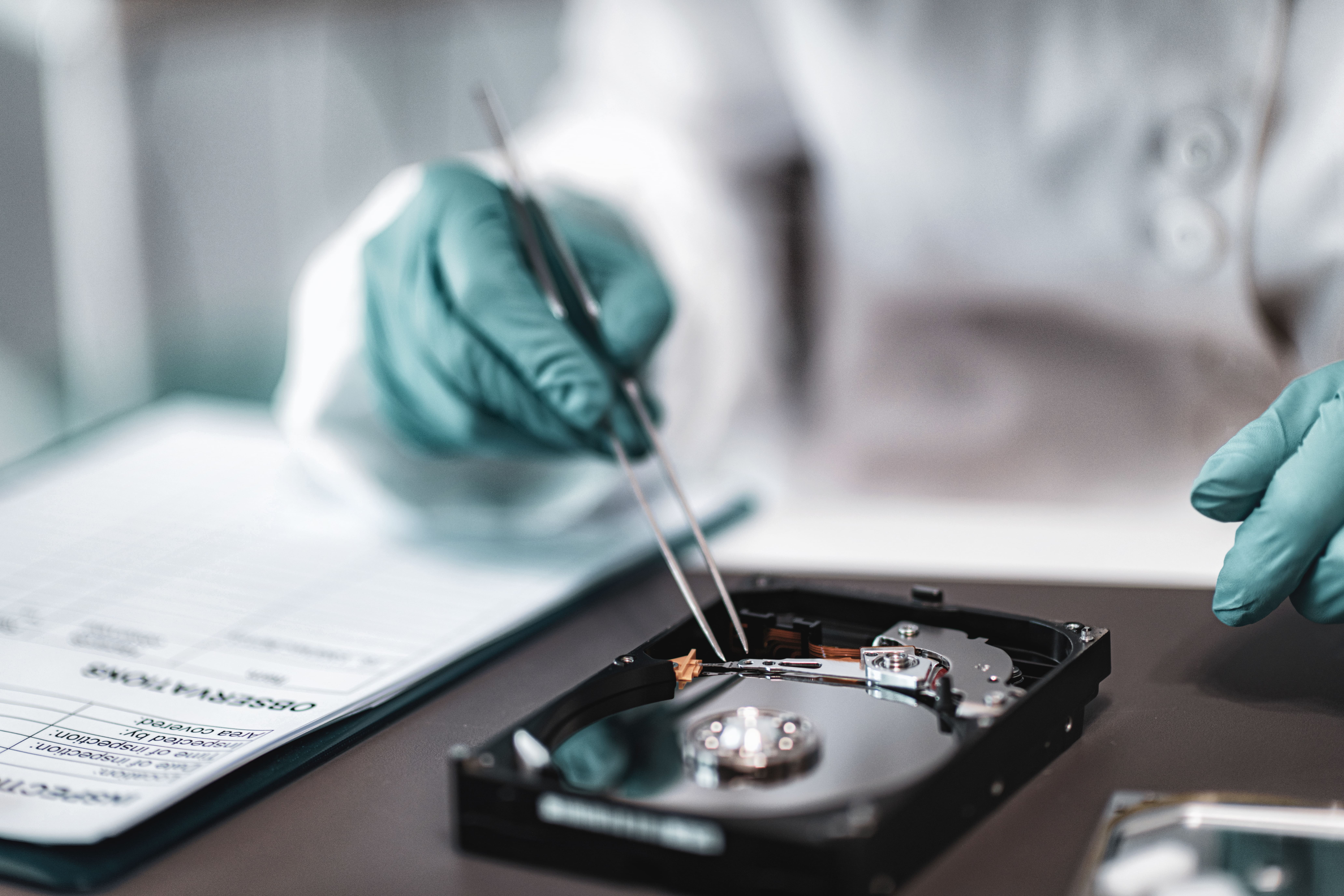
For healthcare and finance firms, secure hard disk disposal in Singapore should be planned with the same care you apply to any other high-risk data process. You need to check retention first, choose the right destruction method, control the chain of custody, and keep the records that show the job was done properly.
When those elements are in place, disposal becomes more than a technical endpoint. It becomes a controlled conclusion to the lifecycle of sensitive data.
At Vision Green, we help you build that process in a way that is practical, compliant, and easy to stand behind. If you need on-site HDD shredding, secure off-site destruction, or a disposal workflow supported by clear documentation, you can explore our hard disk disposal services in Singapore or contact our team to discuss your requirements.
Frequently Asked Questions
How long does on-site hard drive shredding take in Singapore?
For most corporate clients, an on-site shredding session typically takes between 30 minutes and 2 hours, depending on the volume of drives and devices. Mobile shredding units can process a high volume of drives in a single session, so the main factor is usually the quantity being handled. We will give a time estimate during scheduling once the asset volume is known.
Can SSDs be disposed of the same way as HDDs?
Not exactly. The IMDA Singapore states that organisations should have secure disposal processes so data is not recoverable by computer forensic means, and that devices or storage media containing sensitive data should be removed, securely overwritten and/or forensically erased before disposal or reuse.
In Singapore, service providers also list crushing, puncturing and shredding for SSDs when stronger physical destruction is needed. It is also worth noting that degaussing does not work on SSDs, because SSDs store data on flash memory rather than on magnetic platters.
Can a degaussed hard drive be reused or resold?
No. Degaussing permanently damages the servo tracks a hard drive needs to function, which makes the drive inoperable. A degaussed HDD cannot be reused, so it should go on to destruction or certified recycling rather than redeployment.
What happens to hard drives after they are shredded?
After shredding, the storage media is reduced to tiny fragments that are designed to make reconstruction and data recovery impractical. The resulting particles then go through sorting and recycling procedures to reduce environmental impact. Shredding is both a secure destruction method and an environmentally responsible recycling process.
Do you need to erase devices before sending them for recycling in Singapore?
It is best to erase data before dropping devices off for recycling. Make sure to back up data, log out of accounts, remove storage media and perform a factory reset. Qualified recyclers will then apply their own audited sanitisation or destruction processes after collection. Pre-erasure on your side is a sensible extra safeguard, while secure handling by your disposal partner gives you the final layer of assurance.