The Ultimate Guide to Data Center Disposal in Singapore: Ensuring Security, Compliance, and Sustainability
Data centres house critical IT assets, servers, storage devices, and networking equipment that, at some point, would need to be recycled. However, these components also contain very sensitive, pertinent data. These include client data, ranging from individual consumers to huge businesses.
Proper data center disposal in Singapore ensures secure removal, data destruction, compliance with regulations, and environmentally responsible practices. By partnering with a licensed e-waste recycler like Vision Green, businesses can safeguard sensitive information and promote environmental sustainability.
Key Takeaways
- Data Centre Disposal Protects Sensitive Data: Proper disposal ensures that client and business data stored in servers, storage, and networking equipment is fully wiped or destroyed. This prevents unauthorised access, data breaches, and identity theft.
- Compliance with Singapore Regulations is Essential: Licensed e-waste recyclers follow PDPA 2012 and E-waste Recyclers Regulations 2021. Partnering with certified providers ensures legal compliance and reduces the risk of penalties.
- Secure Processes Follow Industry Standards: ITAD providers adhere to standards such as NIST 800-88 for data sanitisation. These methods, including data wiping, degaussing, and physical destruction, ensure data cannot be recovered.
- Environmental Responsibility and Circular Economy: Recycling and refurbishing IT assets support sustainability by recovering materials and reducing e-waste. It allows businesses to minimise their environmental impact while promoting a circular economy.
- End-to-End Decommissioning Adds Value: From collection to certification, a structured decommissioning process safeguards sensitive information, recovers valuable components, and provides audit-ready documentation. This maximises both security and financial value from retired IT assets.
What Does Data Centre Disposal Mean?
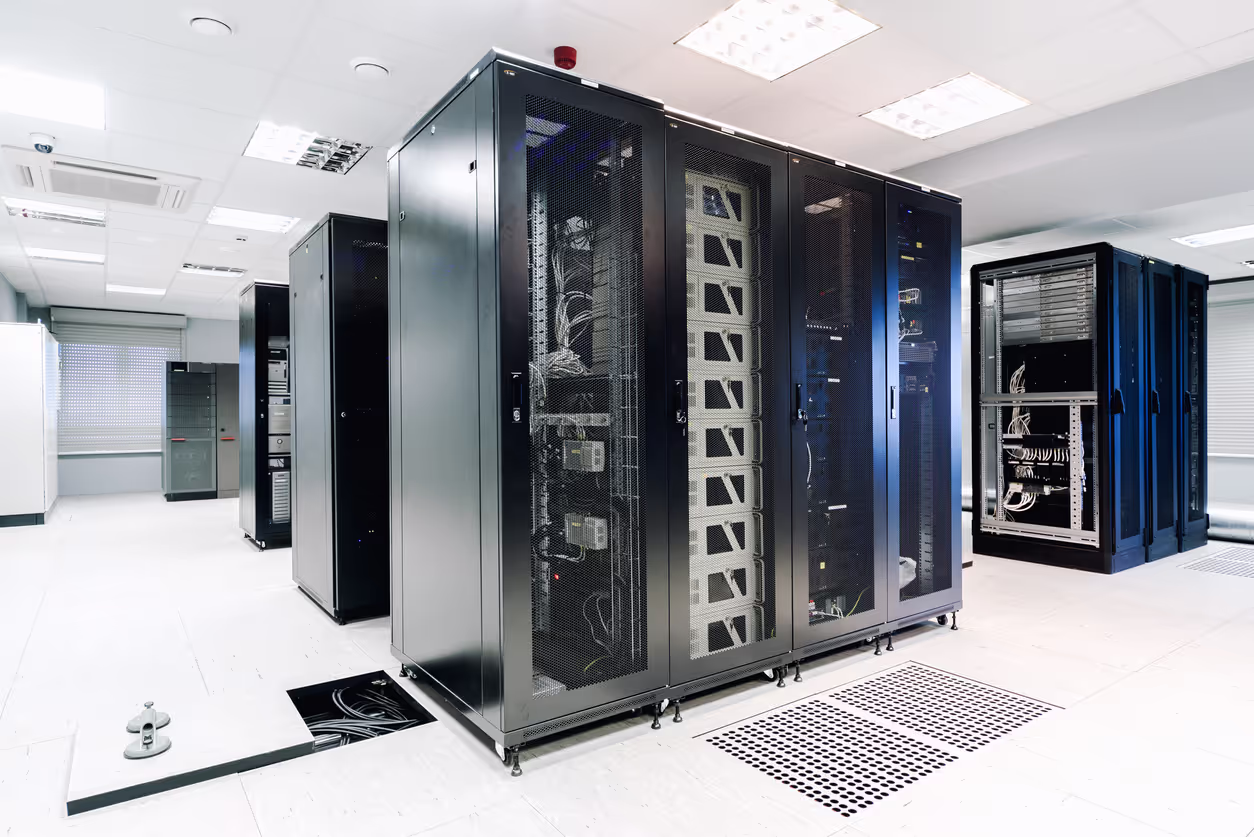
Data centre disposal, or data centre decommissioning, is the structured process of removing, dismantling, and recycling IT assets and associated infrastructure. Due to the bulk of hardware electronics and infrastructure required with data centre disposal, the process involves recycling and/or disposing of these items at scale.
There are two key functions of data centre disposal:
- Harvesting the hardware and infrastructure for their raw materials and components.
- Data destruction, ensuring no trace of sensitive client data from consumers and businesses can be retrieved from the recycled hardware.
Sometimes, devices sent for recycling, such as mobile phones and laptops, can still be used. In these instances, the data center decommissioning provider will refurbish and resell them and share profits with the data center client.
Why Do Data Centres Need Secure Disposal
Secure disposal of IT assets is essential for the following reasons:
- Compliant with the Personal Data Protection Act 2012 (PDPA): Secure disposal ensures that data-bearing devices are handled according to PDPA requirements—particularly, Sections 24 and 25. Section 24 requires organisations to take all reasonable precautions and security measures to protect consumer data, and Section 25 requires organisations to dispose of client data when retention is no longer necessary.
- Prevents Data Breach: Proper data wiping and physical destruction protect sensitive data stored in servers and storage devices. This prevents unauthorised access and identity theft.
- Prevents IP Theft: IT assets often contain valuable intellectual property and proprietary information. Secure disposal protects a company’s competitive advantage and intellectual property rights.
- Protects Consumers and Businesses: Safe disposal reduces the risk of data breaches that could harm customers and clients.
Secure data destruction safeguards sensitive information stored in servers, storage devices, and networking gear. In the digital age, where data theft is rampant, these ITAD services in Singapore are imperative to the decommissioning process.
When Would a Data Centre Need a Data Centre Disposal

A data centre may require a structured disposal process for operational or security reasons. Usually, it allows the data centre to safely dispose of old hardware and leave no trace of company or client data on decommissioned infrastructure.
As such, below are the most common situations where data centre disposal becomes essential:
- Hardware Reaches End-of-Life (EOL) / End-of-Support (EOS): When equipment is no longer supported by manufacturers, it becomes more vulnerable to failures and security risks. Proper disposal ensures outdated hardware is removed safely and recycled to find new life.
- Technology Upgrade Cycles: A team migrating to newer hardware doesn't mean they can leave the old tech lying around. Disposal ensures these retired assets are securely wiped and sustainably processed, rather than left unused.
- Facility Closure: When a data centre shuts down, all IT assets must be decommissioned. That way, no sensitive information about the closing company is left lingering in memory drives.
- Hardware Failure or Critical Damage: Damaged or failing IT equipment may still contain sensitive data. Centre disposal allows this damaged equipment to be recycled and the sensitive content they house to be entirely shredded and wiped
- Migrating to Cloud Services: Transitioning infrastructure to the cloud frees physical, in-house servers and storage. However, with this migration, the old in-house servers would need to be wiped of their data.
Why Partnering with a Licensed E-Waste Recycler Matters
A licensed e-waste recycler ensures environmentally responsible practices and data security—emphasis on licensed, as licensed ones are held to a higher degree of compliance and scrutiny.
Compliance with E-Waste Recyclers Regulations of 2021
Under the E-Waste Recyclers Regulations, an e-waste recycling facility must uphold data security. Section 6 explicitly outlines that all data in a data-bearing device must be permanently erased or destroyed before it’s prepared for re-use, recycled, or disposed of.
Furthermore, e-waste recyclers also have to meet a target material recovery weight, as per Section 3. This means that for any given weight of e-waste that an e-waste recycler receives, they have to be able to yield a weight quota of usable material.
This assures data centers that recyclers will be making the fullest use out of the infrastructure they handed over for disposal
Compliance with the PDPA Act 2012
Data sanitisation also aligns with the Personal Data Protection Act 2012 (PDPA).
- Businesses should secure clients’ personal information. According to Section 24 of the act, an organisation (the recycler’s client) must prevent unauthorised access and tampering of personal data in its possession (e.g., clients' names, addresses, payment information, etc.).
- Businesses shouldn’t leave devices bearing client data lying around. The Section explicitly states that organisations should prevent "the loss of any storage medium or device on which personal data is stored." This means that companies can't simply leave hard drives, servers, or any device containing personal data in landfills. These devices must be completely wiped, leaving no trace on them in case they're lost or misplaced.
- Businesses shouldn’t hold on to customer data when retention is not needed. Section 25 of the act states that "An organisation must cease to retain its documents containing personal data... as soon as it is reasonable to assume that retention is no longer necessary for legal or business purposes."
Licensed recyclers follow NIST 800-88 standards, ensuring that decommissioned assets are fully wiped, so data retrieval and potential exploitation are impossible.
Step-by-step Data Center Decommissioning Process

A typical data centre decommissioning process involves the following steps:
- Step 1: Collection - IT assets are transferred from the data centre to the recycling facility. Licensed recyclers provide secure transportation to processing facilities. However, if the decommissioning will be done onsite, equipment won’t need to be collected.
- Step 2: Recording - A detailed asset inventory is logged for transparency and accountability. This enables asset tracking and chain-of-custody documentation.
- Step 3: Data Sanitisation - Certified data destruction is performed according to NIST 800-88 standards. Data wiping, degaussing, or physical shredding ensures sensitive information is irrecoverable.
- Step 4: Dismantling and Parts Harvesting - Servers, storage devices, and networking gear are dismantled. Valuable components are extracted for circular economy initiatives. Metals are harvested from irredeemable parts.
- Step 5: Refurbishing - Functional devices can be refurbished and resold, often at profit-sharing agreements with clients. Devices may be refurbished only upon explicit request from the client.
- Step 6: Certification and Reporting - Clients receive data destruction and recycling certificates, ensuring the proper disposal of their hardware.
This end-to-end decommissioning ensures data security, environmental compliance, and value recovery.
Difference Between Data Center Disposal and E-Waste Recycling
Data center decommissioning and e-waste recycling, in essence, are the same. However, their focus and the clients they cater to are different.
- Data Centre Disposal: Is more geared towards businesses and institutions. Its primary focus is data destruction. E-waste recycling comes secondary. Due to the bulk of the infrastructure, data centre disposal can be done onsite, meaning the recycling facility goes to the business’ place of operations and decommissions the equipment there.
- E-Waste Recycling: Focuses on recycling components, recovering valuable resources, and refurbishing functional devices. Typically, individuals and businesses have to send their equipment to the facility.
So, if you're a SaaS or data center dealing with large quantities of sensitive client data, opt for data centre disposal. In addition to recycling old servers, they also ensure that data from memory drives is wiped clean, ensuring compliance with NEA regulations and the PDPA Act of 2012.
How to Partner with a Data Center Disposal Solution
Partnering with a professional e-waste recycler involves the following steps:
- Classify and determine the inventory to be processed - Identify all servers, storage devices, and networking equipment for decommissioning. This ensures nothing is overlooked during asset tracking.
- Look for a certified e-waste recycling centre - Choose a licensed recycler. Compliance with NEA regulations ensures proper data destruction services, in turn, upholding the privacy and security of your clients.
- Back up data pre-sanitisation - Preserve critical business data before devices are physically destroyed or wiped. This maintains operational continuity.
- Schedule a pickup (or onsite decommissioning) with an e-waste recycling centre - Licensed recyclers provide secure logistics to pick up your server towers, drives, and other IT assets. Remember, these devices still contain sensitive data and should be appropriately transported to avoid theft. Some providers offer onsite decommissioning, wherein they’ll decommission the equipment at the business’ address.
- Claim data destruction and recycling certificates - Certificates verify compliance and responsible recycling. They are essential for audits and regulatory reporting.
Recycle Old Devices with an E-Waste Recycling Company in Singapore Today!
Data centre disposal is more than just removing old servers and storage devices. It safeguards sensitive information, protects intellectual property rights, and ensures compliance with environmental regulations.
By partnering with Vision Green, businesses in Singapore can:
- Securely destroy data-bearing devices
- Recover valuable components and materials
- Minimise carbon footprint and environmental impact
- Comply with PDPA standards
- Promote circular economy initiatives
Take action today and recycle your retired hardware with Vision Green, Singapore’s trusted e-waste recycling and ITAD partner. Protect your data, maximise asset value, and contribute to a greener, more sustainable future. Contact us today!
Frequently Asked Questions (FAQs)
Is there a risk of data recovery after professional disposal?
When disposal follows standards like NIST 800-88, the risk of recovery is eliminated. Licensed recyclers provide certification to verify data destruction.
Do businesses need to prepare their assets before the recycler picks them up?
Yes, businesses should back up critical data and classify devices for disposal. Proper preparation ensures smooth logistics and prevents accidental data loss.
Are all types of storage media treated the same during disposal?
No, different media types require different sanitisation methods. For example, HDDs may be degaussed, while SSDs often require cryptographic erasure or physical destruction.
Can decommissioned IT assets be used for charitable donations?
Yes, functional equipment that has been securely wiped can be donated to schools, NGOs, or community programs. Data security must be fully verified before redistribution.
What certifications should I look for in an ITAD provider?
Look for certifications such as ISO 27001 (information security), R2 or e-Stewards (recycling standards), and ADISA (data destruction). These demonstrate compliance, accountability, and secure handling.
Can cloud migration eliminate the need for physical IT disposal?
Not entirely. Even after moving workloads to the cloud, existing servers, storage devices, and network hardware must be securely wiped or destroyed.