What Does an E-Waste Recycling Company in Singapore Actually Do With Your Old Electronics?
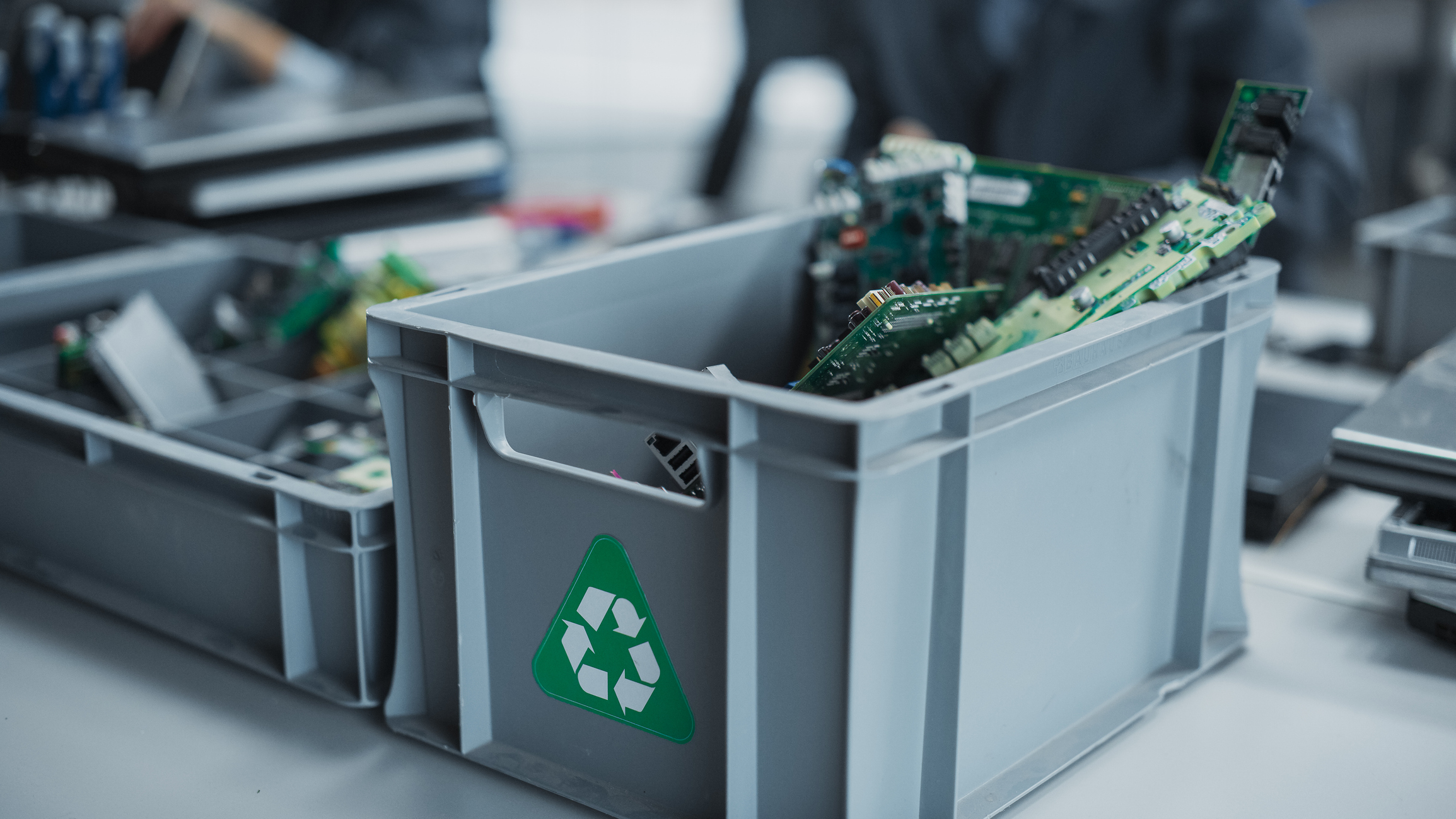
You hand over your old laptop or drop a mobile phone into the e-waste bin at your nearest shopping mall, and then what?
Most people assume their old devices simply get recycled, but few know what that actually means. The journey from drop-off to recovered raw materials is a structured, regulated process, and understanding it matters.
Established in 2021 and operating from a purpose-built licensed facility in Tuas, Singapore's designated industrial zone, Vision Green is an ISO 9001, ISO 14001, ISO 45001, and R2v3-certified e-waste recycling company in Singapore.
We process over 20,000 tonnes of e-waste annually, achieving metal recovery rates of up to 95%, and this guide pulls back the curtain on exactly how it works.
Key Takeaways
- E-waste collected in Singapore is never simply thrown away. It goes through a certified, multi-step recycling process governed by the Resource Sustainability Act (RSA) and the National Environment Agency (NEA).
- Data security is integral to the process. Storage media and data-bearing devices are wiped or physically destroyed before any material recovery takes place.
- A certified e-waste recycling company extracts valuable materials such as copper, gold, and aluminium from printed circuit boards, electric vehicle batteries, and other components, thereby reducing the need for virgin raw materials.
- Improper disposal of electronic waste poses serious environmental and legal risks; working with a licensed recycling partner ensures compliance and environmental accountability.
Why E-Waste Cannot Simply Go Into General Waste
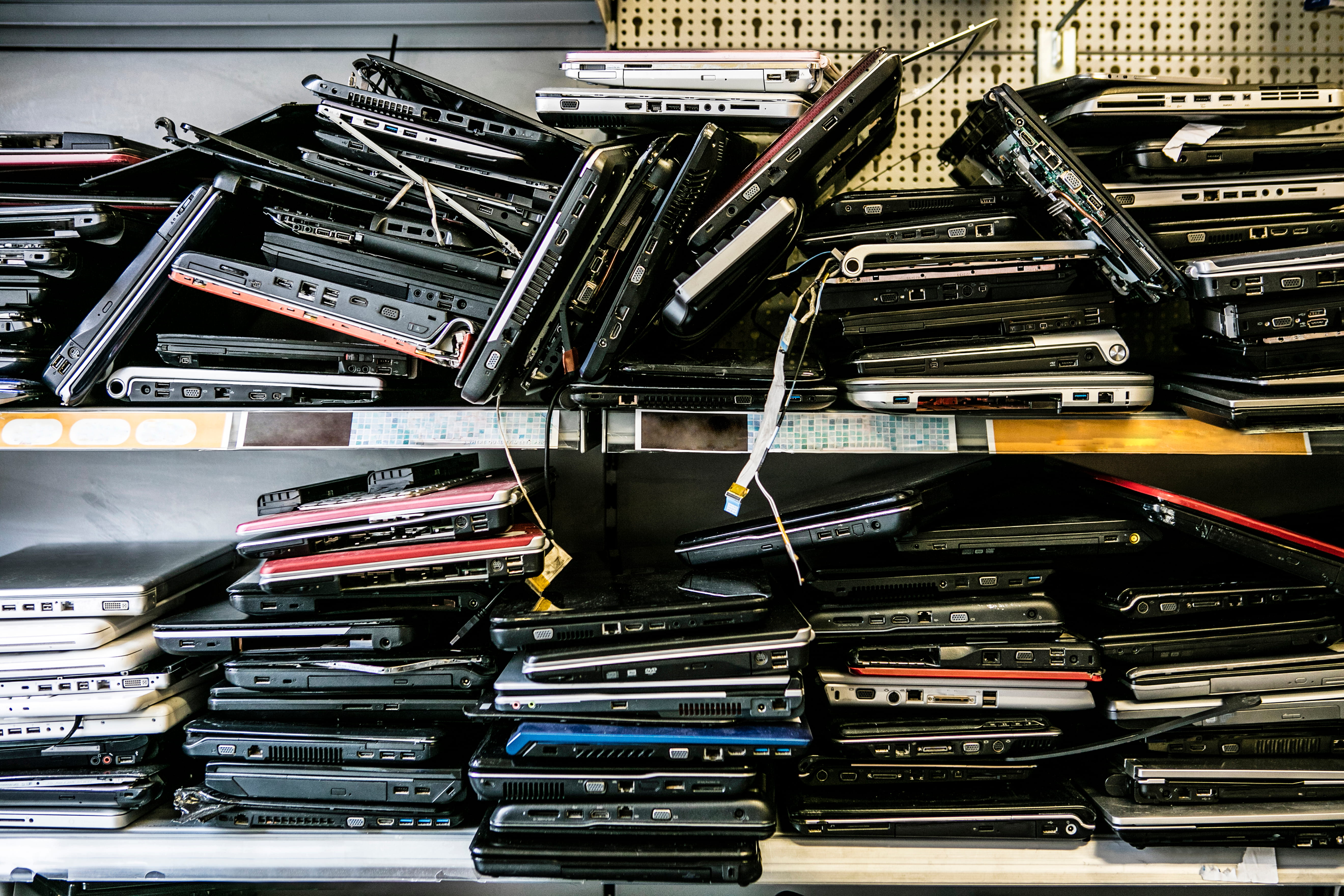
Electronic waste, or e-waste, is not ordinary waste. A single printed circuit board can contain lead, mercury, cadmium, and brominated flame retardants.
Improper disposal of these hazardous materials, even into blue recycling bins, risks contaminating soil and water and may expose informal waste handlers to serious health hazards.
In Singapore, it is also a regulatory offence. Under the Resource Sustainability Act (RSA), Singapore operates a mandatory regulated e-waste management system governed by the National Environment Agency. The system follows an Extended Producer Responsibility (EPR) model, meaning producers and importers of regulated electronics bear legal responsibility for ensuring their products are properly collected and recycled at end of life.
One appointed Producer Responsibility Scheme (PRS) operator, ALBA E-Waste, manages the network of collection points and channels for e-waste collected, directing it to licensed processors.
This means that when you recycle e-waste through an authorised channel, your device enters a system designed to protect both data and the environment.
What Counts as E-Waste in Singapore?
Not all electronic devices are treated equally under the law. Singapore's extended producer responsibility EPR framework distinguishes between regulated and non-regulated electronic equipment.
Here is a quick reference:
Regulated items must be collected through authorised channels, not dropped into blue recycling bins meant for paper, plastic, or glass.
Non-regulated e-waste, such as SD cards, a rice cooker, or a remote control telephone, can be deposited at designated e-waste bin locations managed under NEA's non-regulated programme.
For bulky e-waste, including washing machines, air conditioners, and large appliances, these do not fit through a standard bin's openings. They are collected via town council drives or direct pick-up arrangements with a licensed e-waste recycling company.
The Step-by-Step E-Waste Recycling Process
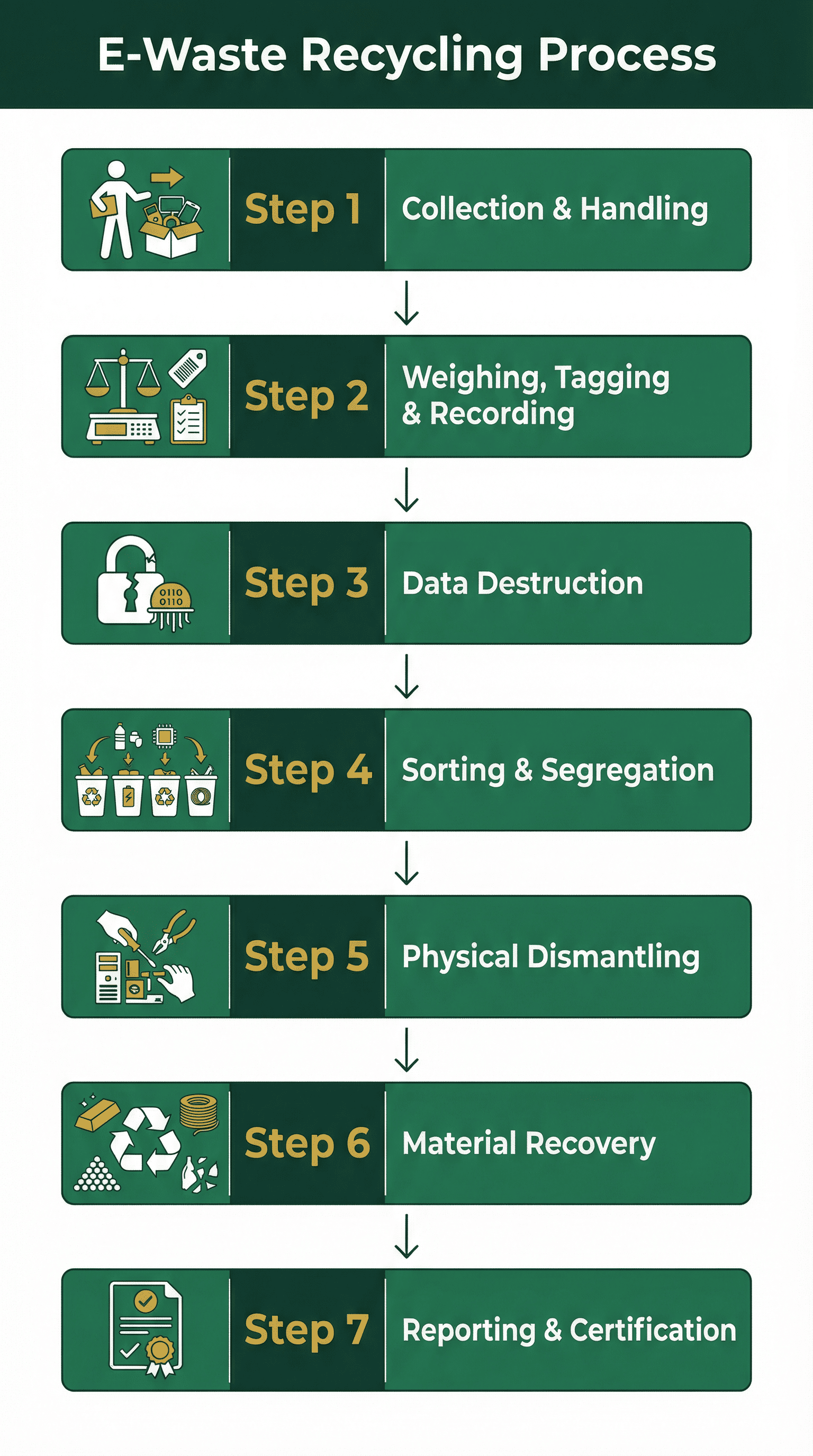
Once your old devices are collected, whether you simply drop them at a collection point or arrange a corporate collection, here is the journey they take through a certified e-waste management system.
Step 1: Collection & Proper Handling
Devices are collected from e-waste bins at shopping malls and public areas, from scheduled collection drives, or via direct corporate pickup. Bulky e-waste is handled separately through town council programmes or licensed recyclers. Every consignment follows a strict chain-of-custody protocol, ensuring proper handling of hazardous substances and preventing diversion to general waste.
Step 2: Weighing, Tagging & Recording
Upon arrival at the facility, all e-waste is weighed, tagged, and logged into a tracking system. This establishes full traceability and ensures accurate reporting for compliance with the National Environment Agency's regulated e-waste management requirements.
At Vision Green's Tuas facility, this tracking system supports full chain-of-custody documentation from the moment your devices arrive at the gate, a requirement of both R2v3 certification and NEA licence conditions.
Step 3: Data Destruction for Data-Bearing Devices
Before any physical dismantling begins, data-bearing devices undergo certified data destruction. This typically involves a factory reset followed by certified overwriting, degaussing, or physical shredding of the PCB board. Clients receive a Certificate of Destruction confirming that confidential information cannot be recovered from any storage media or portable hard disk.
Step 4: Sorting & Segregation
E-waste is sorted by product type (e.g., laptops, mobile phones, printed circuit boards, docking stations, game console units, sound systems, and more) and by material composition. Items in good working order may be assessed for refurbishment and extended use. The remainder proceeds to de-manufacturing. Proper collection and sorting at this stage determines how efficiently valuable materials can be recovered downstream.
Step 5: Physical Dismantling & Material Recovery
Technicians carry out physical dismantling, separating components by material stream — copper wiring, aluminium chassis, steel casings, and precious-metal-rich printed circuit boards.
Hazardous materials, such as mercury lamps, lead solder, and cadmium from portable batteries, are isolated for proper treatment in line with Singapore's hazardous substances regulations. Items like electric vehicle batteries are handled under specific safety protocols given their chemical and thermal risks.
Step 6: Further Processing & Material Recovery
Extracted components are sent to licensed downstream partners for further processing. Metals are refined and re-enter the supply chain as raw materials. Valuable resources (e.g., gold, silver, copper, aluminium, lithium, and cobalt) are recovered from printed circuit boards, electric vehicle batteries, and other electronic equipment, reducing reliance on virgin mining. This stage is where material recovery directly translates into environmental and economic value.
Step 7: Reporting & Certification
A final report is issued covering total e-waste collected, recovered material weights, and data destruction methods used. This supports clients' ESG reporting and demonstrates compliance with Singapore's extended producer responsibility framework under the Resource Sustainability Act. A consolidated recycling certificate is issued, simplifying documentation for organisations with regulatory obligations.
Data Security: A Critical Step Before Recycling
For businesses, data security is not optional. Data-bearing devices hold confidential information that must be irreversibly destroyed before any physical dismantling.
A certified e-waste recycling company in Singapore, like Vision Green, will typically offer:
- Factory reset and certified data overwriting (for functional devices)
- HDD degaussing (for magnetic drives)
- Physical shredding of the PCB board and storage components
- On-site destruction options for maximum chain-of-custody assurance
These processes ensure that even if a portable hard disk, docking station, or game console is later processed for material recovery, no readable data can ever be reconstructed. Every serial number is documented, and clients receive formal proof of destruction.
What Valuable Materials Are Actually Recovered?
Electronic equipment contains a surprising concentration of valuable resources, often higher per kilogram than raw ore. From printed circuit boards alone, recyclers can recover gold, silver, palladium, and copper. Electric vehicle batteries yield lithium, cobalt, and nickel, critical inputs for battery manufacturing.
The valuable materials typically recovered through certified waste recycling include:
- Copper from wiring, printed circuit boards, and motors
- Aluminium from device casings and heat sinks
- Gold, silver & palladium from PCB board contacts and connectors
- Steel & ferrous metals from washing machines, air conditioners, and structural components
- Lithium, cobalt & nickel from portable batteries and electric vehicle batteries
- Plastics are sorted and sent for further processing into secondary raw materials
By recovering these raw materials, the recycling process directly reduces the environmental impact of mining and manufacturing, and supports Singapore's circular economy goals under its Zero Waste Masterplan.
How to Properly Recycle E-Waste in Singapore
For Individuals
- Drop small devices (mobile phones, AirPods, torch light, headphones, Bluetooth speaker, sound bar) into a designated e-waste bin at your nearest shopping mall, community centre, or supermarket.
- For bulky e-waste such as washing machines or air conditioners, contact your retailer for a one-for-one take-back, or check with your town council for scheduled drives.
- For non-regulated items such as hair dryers, electric kettles, air fryer fans, or sound systems, use NEA-designated drop points.
- Always perform a factory reset before disposal and remove any SD cards or portable batteries.
For Businesses
- Engage a licensed e-waste recycling company in Singapore with certified data destruction capabilities.
- Ensure your recycling partner can handle the full range of your electronic equipment — from servers to CCTV power supply units, docking stations, and printed circuit boards.
- Request a Certificate of Destruction for all data-bearing devices and a recycling report for ESG and extended producer responsibility EPR compliance.
- Confirm your recycler is registered with the National Environment Agency and holds R2v3, ISO 14001, and ISO 9001 certifications.
E-Waste Recycling Companies in Singapore Do More Than Just Collect
From the moment your device is dropped off to the point where its metals re-enter the supply chain as raw materials, e-waste recycling in Singapore is tightly governed and multi-step. It protects data security, recovers valuable materials, safely manages hazardous substances, and fulfils extended producer responsibility EPR obligations under the Resource Sustainability Act.
On the other hand, improper disposal alongside general waste — not only wastes valuable resources but carries real legal and environmental consequences.
If your business generates e-waste and needs a certified recycling partner in Singapore with end-to-end traceability, proper collection, and documented material recovery, Vision Green is ready to help.
Contact us to discuss a solution tailored to your organisation's needs.
References
- National Environment Agency — E-Waste Management
- Ministry of Sustainability and the Environment — Resource Sustainability Act
- ALBA E-Waste Singapore — Types of E-Waste & EPR Framework
- Towards Zero Waste Singapore — Electronic Waste
- Recycle.gov.sg — Electronic Waste: Where Do They Go?
Frequently Asked Questions About E-Waste Recycling Company in Singapore
Can I recycle e-waste for free in Singapore?
Yes, for most consumer electronics. Regulated items such as mobile phones, laptops, and portable batteries can be dropped off at no cost at authorised collection points under the EPR scheme. For businesses with large volumes or bulky e-waste requiring scheduled pickup, fees may apply based on the quantity and type of electronic equipment.
How do I know if an e-waste recycling company in Singapore is legitimate?
Check that the company is registered with the NEA and holds current certifications. A fully licensed e-waste recycling company in Singapore should hold:
- R2v3 certification (issued by SERI)
- ISO 14001:2015 — Environmental Management
- ISO 9001:2015 — Quality Management
- ISO 45001:2018 — Occupational Health & Safety
- NEA Toxic Industrial Waste Collector licence (e.g., TWCL20210012)
- NEA General Waste Disposal Facility licence
- Premise Authorisation for Li-ion Batteries, Electronics & Non-ferrous Waste (if processing EV batteries)
Vision Green holds all of the above. You can verify NEA licences directly through the National Environment Agency's public register. A legitimate recycling partner will also provide a Certificate of Destruction for data-bearing devices and a recycling report detailing recovered material weights, not just an invoice.
What happens if e-waste is exported overseas for recycling instead of being processed locally?
Not all e-waste collected in Singapore is processed domestically. Some materials are sent to licensed overseas facilities for further processing and material recovery. However, any cross-border movement of hazardous e-waste must comply with the Basel Convention, which regulates the transboundary shipment of hazardous waste to prevent dumping in developing countries. A certified recycling partner will ensure all exports meet these international standards.