Data Centre Decommissioning Checklist for IT and Facilities Teams in Singapore
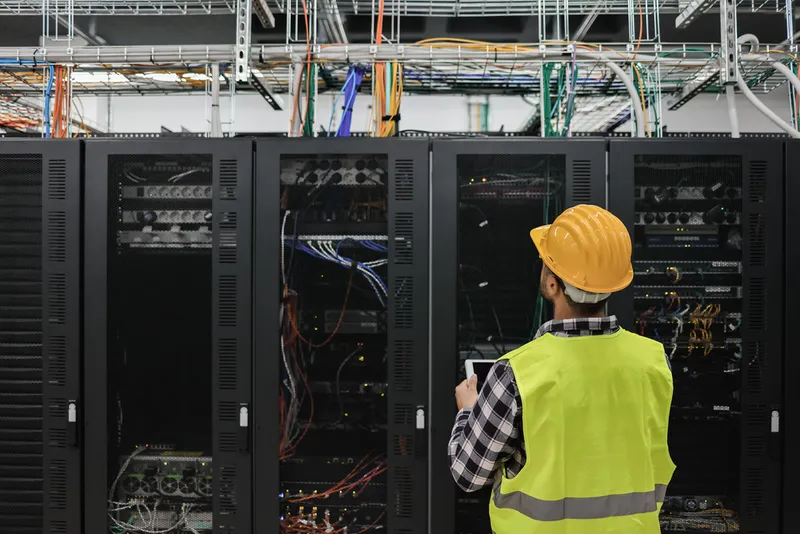
Data centre decommissioning requires coordinated planning across IT, information security, facilities, finance and external vendors. A complete project should cover system migration, asset inventory, secure data handling, equipment removal, value recovery and final reconciliation.
Professional ITAD services in Singapore can support the process through serial-level tracking, NIST-aligned data sanitisation or destruction, secure logistics, equipment remarketing and responsible recycling.
The project should only be closed after every asset has a documented outcome and all chain-of-custody, destruction, sanitisation and recycling records have been verified.
Closing a data centre is not simply a matter of switching off the servers and clearing the racks. For IT, security and facilities teams, one missed dependency, untracked drive or poorly documented handover can create operational delays, data security risks and costly audit issues under the PDPA.
A successful decommissioning project requires IT, information security, facilities, finance and external vendors to work from the same plan. Every stage, from system migration and asset tracking to equipment removal, value recovery and final sign-off, must be carefully coordinated.
Professional ITAD services in Singapore can help organisations manage this process through secure data destruction aligned to NIST SP 800-88, traceable asset disposition under ISO 27001 controls, equipment remarketing and responsible e-waste recycling in line with Singapore's E-Waste Recyclers Regulations 2021.
Key Takeaways
- Start with a complete inventory of hardware, stored data and system dependencies.
- Assign clear responsibilities across IT, information security, facilities, finance and external ITAD vendors.
- Confirm migration and data destruction requirements, aligned to NIST SP 800-88, before removing any equipment.
- Track every asset through reuse, resale, destruction or recycling with serial-level chain-of-custody records.
- In Singapore, ensure the process supports compliance with the PDPA (Sections 24 and 25) and the E-Waste Recyclers Regulations 2021.
- Close the project only after all documentation, site conditions and reconciliation records have been verified.
Data Centre Decommissioning Checklist at a Glance
A phased approach helps teams manage operational, security and financial risks throughout the project.
Phase 1: Define the Scope and Responsibilities
Start by defining exactly what the project covers. It may involve an entire data centre, a smaller server room, selected racks, legacy infrastructure, equipment affected by a cloud migration or hardware located within a colocation facility.
The scope should identify which assets, rooms and supporting systems are included. It should also clarify whether the project covers racks, cables, batteries, power equipment and other infrastructure in addition to servers and storage devices.
Clear ownership is equally important.
Before work begins, confirm the project schedule, maintenance windows, access requirements, loading arrangements and escalation contacts. Any uncertainty over responsibilities can lead to shutdown delays, untracked assets or incomplete documentation.
Phase 2: Build an Asset and Dependency Inventory
A reliable inventory is the foundation of the decommissioning project. It should cover all equipment within scope, including:
- Servers and storage systems
- Network switches and routers
- Racks and cabinets
- HDDs and SSDs
- Backup tapes
- Power equipment
- Cables and accessories
Record enough information to identify, locate and assign an outcome to every asset.
The inventory should also cover dependencies. Before switching off a server, verify which applications, databases, network connections and business processes rely on it. Removing hardware without checking these relationships can cause service interruptions or the accidental loss of required data.
Phase 3: Plan Data Migration and Destruction
Every data-bearing device should have an approved disposition outcome before it leaves the rack. IT and information security teams should determine:
- Which data must be migrated?
- Which backups must be retained?
- Whether backup restoration must be tested?
- Which devices can be securely sanitised?
- Which media must be physically destroyed?
- Which reports or certificates are required?
Reusable devices may be suitable for verified secure sanitisation (aligned to NIST SP 800-88 Clear or Purge) before redeployment or resale.
HDDs may be degaussed, while SSDs and other flash-based media typically require cryptographic erasure or physical shredding, as degaussing is not effective on flash storage. Damaged, failed or highly sensitive media should be physically destroyed under strict chain-of-custody controls.
The correct method will depend on the media type, its condition and the sensitivity of the information. For a more detailed explanation of the process, refer to Vision Green’s guide to data centre disposal in Singapore.
Once data handling decisions are locked in, attention shifts from the data itself to the physical environment. Phase 4 covers the site preparation and removal work that turns the plan into a controlled shutdown.
Phase 4: Prepare the Site and Remove Assets Safely
IT and facilities teams should develop a coordinated shutdown and removal plan. Before physical work begins, confirm that the following tasks have been completed:
- Approve the shutdown sequence
- Confirm migration and backup completion
- Notify affected stakeholders
- Document rack and cable layouts
- Isolate power safely
- Arrange site access and loading areas
- Identify lifting and transport requirements
- Confirm whether racks, cables and batteries are included
Equipment should be removed according to the approved sequence, not on a rack-by-rack basis. Following the sequence reduces the risk of disconnecting systems that remain active or that are required by other equipment.
During removal, each asset should be scanned or manually recorded, labelled and matched against the inventory. Its status should be updated before it leaves the premises.
Chain-of-custody records should be maintained throughout the handover and transport process. These records show who controlled the equipment at each stage and help the organisation investigate any missing or mismatched assets.
Phase 5: Decide Whether to Reuse, Resell or Recycle
Not every retired asset needs to be physically destroyed. Equipment should be assessed according to its condition, ownership, security requirements and market value.
Asset recovery can help offset part of the decommissioning cost. Servers, networking equipment, memory modules and other components may retain value when they are functional and still in demand.
However, data security must come first. No data-bearing equipment should be reused or resold until sanitisation has been completed and verified.
Phase 6: Reconcile Records and Close the Project
The project is not complete when the final server leaves the site. IT, facilities, security and finance teams should review both the physical site and the final documentation before signing off.
Verify that:
- Every asset has a documented outcome
- Serial numbers match the final report
- Missing or unidentified assets have been resolved
- Data destruction certificates have been received
- Reused devices have passed sanitisation checks
- Leased equipment has been returned
- Recycled assets have supporting records
- The site has been cleared and inspected
- Finance has recorded resale values or write-offs
The close-out package should contain enough evidence to demonstrate what happened to every asset.
Common Data Centre Decommissioning Mistakes
Even projects that follow the six phases above can run into difficulty when teams overlook dependencies or documentation at critical handover points. The following patterns are the ones IT and facilities leads in Singapore most often flag during post-project reviews:
- Removing equipment before mapping system dependencies
- Relying on incomplete or outdated asset registers
- Missing storage media inside servers and appliances
- Mixing leased, owned and third-party equipment
- Moving assets without serial-level tracking
- Destroying equipment that still has recoverable value
- Closing the project before resolving discrepancies
These issues can create operational delays, data security risks and difficulties during audits. Most can be prevented through early planning and consistent asset reconciliation.
When to Engage an ITAD Provider
Many of the mistakes above stem from engaging an ITAD provider too late in the project. To avoid rework, missed assets and rushed documentation, an ITAD provider should be involved during the planning stage rather than contacted only after the equipment has been disconnected.
Early involvement allows the provider to assess the site, identify logistical requirements, align chain-of-custody procedures with ISO 27001 Annex A controls (7.10 Storage Media and 7.14 Secure Disposal or Re-use of Equipment) and recommend suitable data destruction and asset recovery processes. Typical support from a certified ITAD provider in Singapore may include:
- Site surveys
- Asset scanning and recording
- Equipment dismantling and removal
- Secure logistics
- Data sanitisation and physical destruction
- Equipment testing and remarketing
- E-waste recycling
- Final certification and reporting
Professional ITAD support can help maintain traceability from initial collection through to final disposition, while reducing the operational burden on internal IT and facilities teams.
Plan Your Data Centre Decommissioning with Vision Green
Bringing this level of support in-house is rarely practical for a one-off or annual project, which is why most organisations partner with a certified ITAD provider.
A well-managed data centre decommissioning project protects business continuity, sensitive information and the remaining value of retired equipment. It also gives your organisation a complete record of where every asset went and how each data-bearing device was handled.
Whether you are closing a server room, moving workloads to the cloud or refreshing ageing infrastructure, Vision Green can support the project from collection to final reporting.
Contact Vision Green for ITAD services in Singapore, including asset tracking, secure data destruction, equipment removal, value recovery and responsible recycling.
Frequently Asked Questions
What is included in data centre decommissioning?
A project may include servers, storage systems, network equipment, racks, cables, power devices, backup media and other data-bearing equipment. The final scope should be confirmed before work begins.
What does an ITAD provider do?
An ITAD provider manages the secure tracking, removal, sanitisation, resale and recycling of retired IT equipment. It may also provide chain-of-custody documentation and final disposition reports.
Can data centre equipment be resold?
Yes. Functional equipment with market demand may be tested, securely sanitised (typically to NIST SP 800-88 Purge standard) and remarketed, provided all data security requirements are verified before resale.
A certified ITAD provider can often share the recovered value with the client under an agreed profit-share arrangement.
What documents should be provided?
Typical records include asset reports, chain-of-custody documents, sanitisation or destruction certificates, asset recovery reports and recycling documentation.