What Happens When Companies Keep Old Laptops Too Long? A Singapore Recycling Risk Guide

Old laptops rarely leave the office the moment they are retired. In many organisations, they end up stacked in storerooms, left under desks, or kept aside during upgrade cycles with the intention of dealing with them later.
The problem is that “later” often turns into months or even years. By then, what seemed like a harmless delay can create data security exposure, weaker audit trails, falling recovery value, and a growing disposal backlog.
For organisations that want a structured way to manage end-of-life devices, laptop recycling services in Singapore are essential.
Key Takeaways
- Old laptops can still contain recoverable data, even if files were deleted or the device no longer works.
- Delaying disposal reduces resale or recovery value and makes asset tracking harder.
- Poor handling of retired devices can create compliance, audit, and governance issues under Singapore’s data protection and e-waste frameworks.
- A formal recycling process helps organisations protect data, maintain documentation, and clear obsolete assets responsibly.
Why Companies Keep Old Laptops for Too Long

Most organisations do not hold onto old laptops because they want to. It usually happens because disposal falls between teams.
IT may have completed a refresh cycle, but finance, operations, compliance, or facilities may still need to decide what happens next.
In some cases, businesses delay because they are unsure whether devices should be reused, resold, donated, or destroyed.
In others, old equipment simply builds up during relocations, downsizing, or hardware replacements.
As a result, retired laptops remain in limbo. What begins as temporary storage can quietly turn into unmanaged risk.
The Hidden Risks of Holding Old Laptops Too Long
Data exposure does not disappear with age
A laptop does not become safe simply because it is old, broken, or switched off. Storage media can still retain sensitive business, employee, or customer data.
The Personal Data Protection Commission has highlighted that standard actions such as deleting files, emptying the recycle bin, or formatting a device do not necessarily erase the underlying data.
That means a forgotten laptop in storage may still contain recoverable information long after it has left daily use.
Audit and compliance gaps become harder to explain
In Singapore, organisations are required to make reasonable security arrangements to protect personal data and to cease retention or dispose of personal data properly when it is no longer needed for business or legal purposes.
When old laptops accumulate without a clear process, it becomes harder to show who was responsible for them, how they were protected, and when they were taken out of service. That can create unnecessary pressure during internal reviews, client due diligence, or compliance checks.
Asset value declines while disposal costs grow
The longer old laptops sit untouched, the more likely they are to lose reuse, refurbishment, or recovery value. A device that may have had resale potential six months ago may later be worth only scrap value. At the same time, companies still absorb the hidden cost of storage, tracking, handling, and eventual clearance. Delayed decisions rarely preserve value. More often, they reduce it.
Storage backlogs create operational friction
Retired laptops also create practical problems. They occupy limited office or warehouse space, complicate inventory management, and become harder to account for during office moves or staff turnover.
Once assets are mixed together without proper logs, organisations may not know how many devices they still hold, what condition they are in, or whether they contain batteries or storage media that need special handling.
Environmental responsibility is delayed, too
Singapore’s e-waste framework exists to support proper collection, treatment, and resource recovery. When usable or recyclable laptops are left sitting in storage indefinitely, materials are not recovered, and responsible processing is postponed.
For companies tracking sustainability or ESG performance, delayed disposal can undermine broader governance and environmental objectives.
What This Means for Businesses in Singapore
For businesses, old laptops are not just an IT issue. They sit at the intersection of data protection, operations, compliance, and sustainability.
A device that no longer has business value can still create business risk if it has not been formally assessed and removed through a controlled process.
That is why many organisations move beyond ad hoc disposal and adopt structured laptop recycling services in Singapore.
The goal is not simply to “get rid of old devices”, but to manage them in a way that protects data, maintains traceability, and supports responsible recycling.
How Laptop Recycling Services in Singapore Reduce These Risks
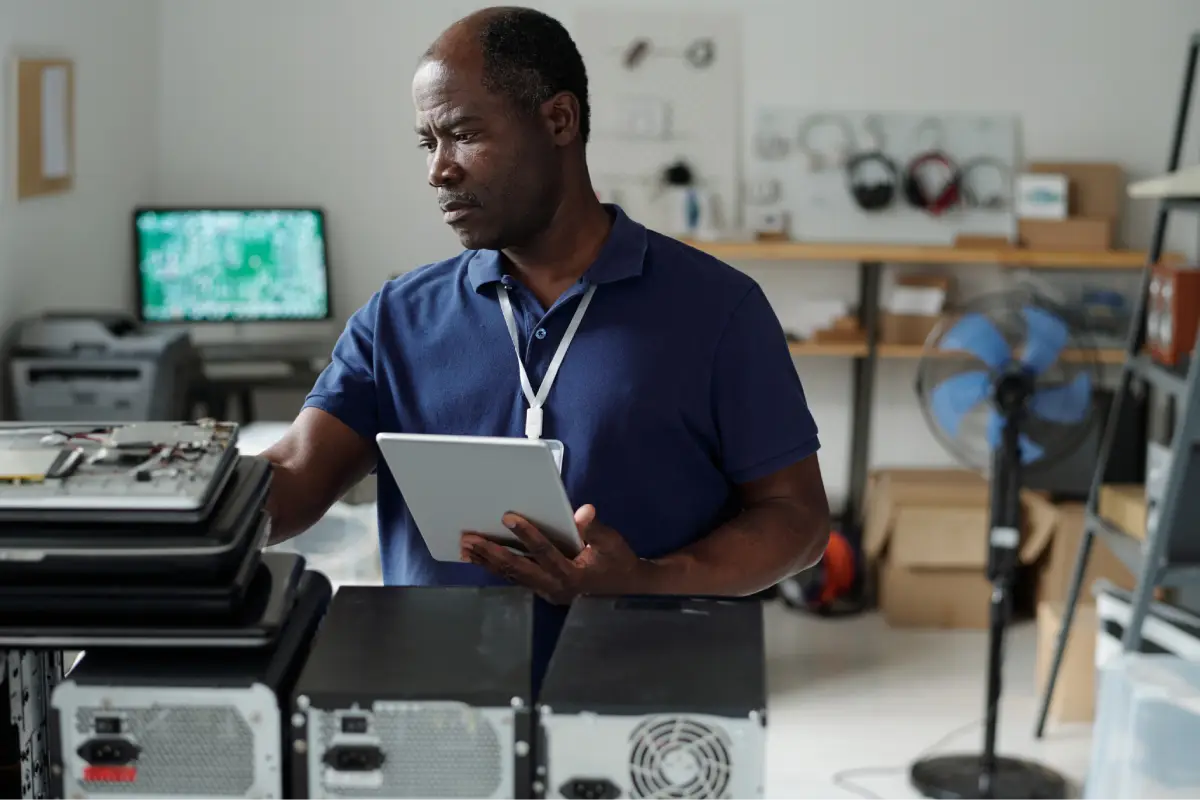
When old laptops are handled through a proper recycling process, companies can reduce risk and keep better control over their retired assets.
- They provide secure collection. Laptops are collected and transported securely, which lowers the risk of loss, mishandling, or unauthorised access.
- They keep clear records. Devices can be weighed, tagged, and recorded so the company knows what was collected and how it was handled.
- They sort devices properly. Laptops can be separated for reuse, refurbishment, dismantling, or recycling based on their condition and business needs.
- They improve traceability. A structured process creates a clear asset trail through serial number logging, tracking, and final reporting.
- They support safer data handling. This is especially important for data-bearing devices, where the storage media must be handled carefully before disposal.
- They allow proper data destruction. The PDPC recommends secure deletion, degaussing, or physical destruction where needed before media is reused, exchanged, or disposed of.
By using laptop recycling services in Singapore, companies can reduce data risks, improve accountability, and manage old devices more securely and efficiently.
What to Look for in a Laptop Recycling Services Singapore Partner
Not all service models offer the same level of control. When evaluating laptop recycling services in Singapore, businesses should look for a provider that can support:
- secure collection and chain of custody
- clear inventory or serial number tracking
- data destruction or sanitisation options
- certificates and final reporting
- responsible downstream recycling processes
- handling for batteries and mixed IT equipment
- support for audit and ESG documentation
If your organisation is comparing options, it may also help to review the difference between e-waste recycling and disposal, especially when deciding how to treat non-working or obsolete devices.
A Practical Way to Clear Old Laptop Backlogs
Here’s an approach we advise our clients to take to clear their laptop backlogs:
- Start by identifying what devices are still being stored and separating them into clear categories: reusable, remarketable, non-functional, and ready for recycling.
- Confirm whether any of them still contain storage media or embedded batteries.
- Once that is done, work with a qualified recycling partner to arrange collection, track the assets, and retain the final records.
Taking these steps helps businesses clear old devices in a more organised way while reducing data, compliance, and operational risks. It also supports a more responsible long-term approach to IT asset management and e-waste handling.
Frequently Asked Questions
Is deleting files enough before recycling a laptop?
No. Deleting files, clearing the recycle bin, or formatting a laptop does not necessarily permanently remove the underlying data. Data-bearing devices should be sanitised or destroyed using appropriate methods before recycling.
How long should companies keep retired laptops?
There is no one-size-fits-all timeframe, but retired laptops should not remain in indefinite storage. Once they are no longer needed for business or legal purposes, organisations should move them into a formal disposal or recycling workflow.
Can broken or non-working laptops still be recycled?
Yes. Even non-working laptops may contain recyclable materials and components that can be recovered through proper processing.
Why use laptop recycling services in Singapore instead of general disposal?
Professional laptop recycling services in Singapore offer clearer handling, better traceability, and stronger support for secure data management, reporting, and responsible material recovery.
What documents should a recycling provider give?
Businesses should look for inventory records, destruction or recycling certificates, and final reports that support internal governance, audits, or sustainability reporting.
Clear Old Devices Before They Become Bigger Risks
Keeping old laptops for too long often feels harmless until the risks begin to compound. What starts as temporary storage can turn into data exposure, weaker audit readiness, lost asset value, and unnecessary operational clutter.
A structured recycling process helps businesses resolve all of these issues more efficiently.
At Vision Green, we support organisations with secure, traceable e-waste recycling and IT asset handling workflows designed for accountability, compliance, and responsible recovery.
If your business is reviewing how it manages retired laptops, explore our laptop recycling services or contact us to learn how we support secure, sustainable disposal in Singapore.